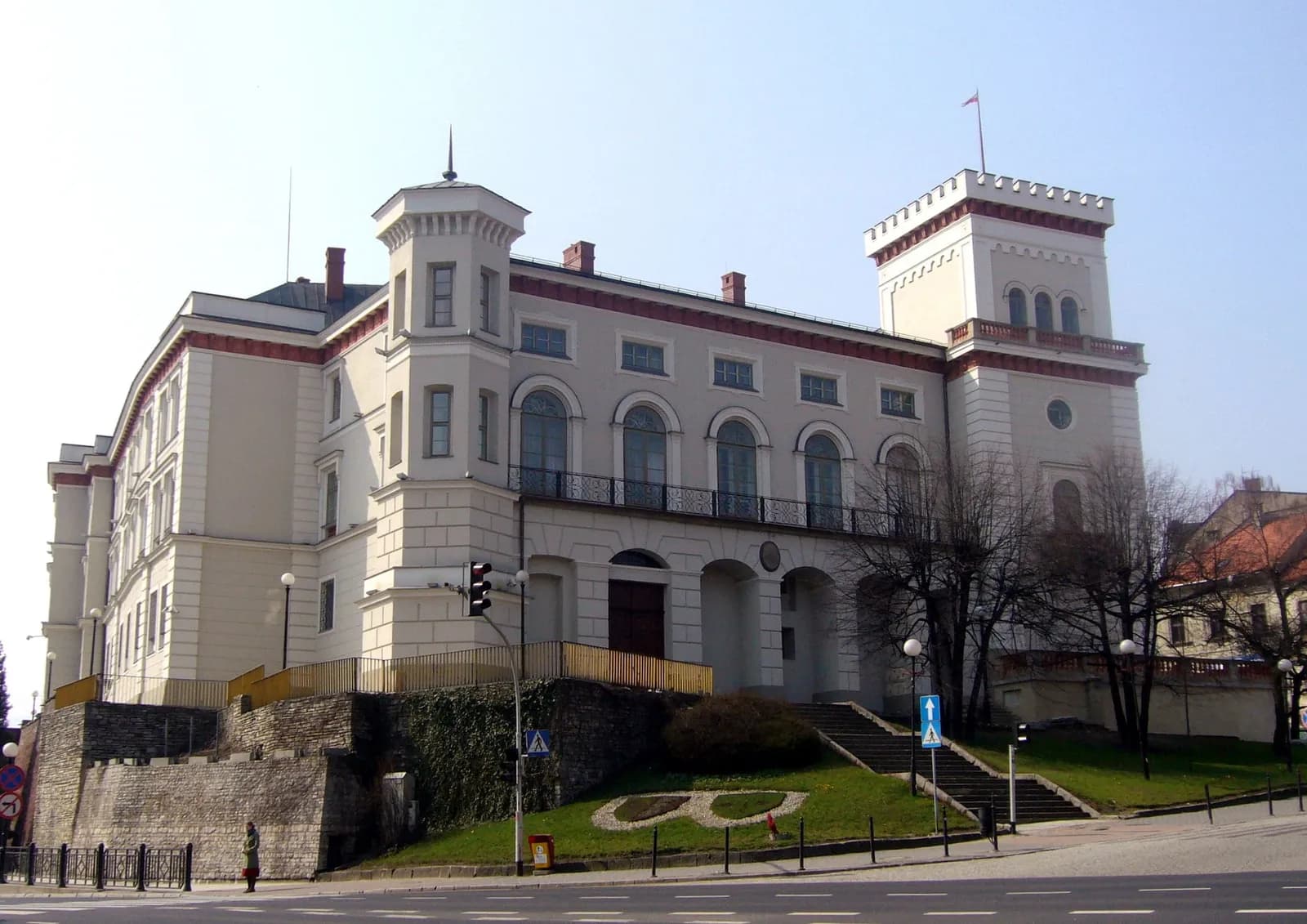
Rising above the charming streets of Bielsko-Biała's Old Town, Zamek Sułkowskich has been at the centre of the city's history for more than 700 years. From medieval fortress to ducal residence and, today, one of the region's leading museums, the castle has evolved alongside the community that grew around it.
Whether you are visiting Bielsko-Biała for the first time or rediscovering your own city, the castle offers an ideal place to begin. Standing on the Hill, just a short walk from the Market Square, it provides an immediate sense of the city's rich heritage. Within its walls are stories of trade, politics, architecture and everyday life that continue to shape Bielsko-Biała's identity today.
It is easy to understand why generations of residents have regarded the castle as the city's defining landmark. While many historic buildings have changed beyond recognition over the centuries, Zamek Sułkowskich has remained a constant presence, adapting to each new chapter in local history while preserving its remarkable past.
The oldest building in Bielsko-Biała
Long before Bielsko and Biała became the twin city we know today, this hilltop site was chosen for its strategic importance. Archaeological evidence indicates that a wooden fortified settlement occupied the area during the 13th century, protecting one of the region's most important trade routes.
According to local legend, the hill was once home to a bandits' stronghold that preyed on travelling merchants before Duke Casimir of Opole drove them away and established a hunting lodge in its place. Although the legend cannot be fully verified, it reflects the castle's long association with protecting travellers and controlling movement through this important part of southern Poland.
By the second half of the 14th century, a substantial masonry castle had replaced the earlier wooden fortifications. Built under Duke Przemysław I Noszak of Cieszyn, it quickly became one of the strongest defensive positions in the region.
Today, visitors can still see traces of those medieval foundations, hidden beneath the elegant appearance created by centuries of later rebuilding.
Guarding an important frontier
The castle's location was no coincidence.
For hundreds of years, the nearby River Biała marked political borders that shifted as kingdoms, duchies and empires expanded or declined. At different points in its history, the fortress helped protect the frontiers between the Duchies of Cieszyn and Oświęcim, the Kingdom of Bohemia, the Kingdom of Poland and the Habsburg Monarchy.
This strategic role brought both opportunity and responsibility. Merchants, soldiers and diplomats all passed through the area, contributing to the growth of the settlement below the castle. As trade flourished, so too did Bielsko, laying the foundations for the prosperous textile town that would later emerge.
Walking around the castle today, it is difficult to imagine that this peaceful cultural attraction once stood at the centre of regional defence.
From fortress to aristocratic residence
As military technology evolved and political circumstances changed, the castle gradually lost its defensive importance.
Instead, it became the administrative and residential centre of the Bielsko State Country. A succession of influential noble families, including the Promnitz, Schaffgotsch, Sunnegh, Solms and Haugwitz dynasties, adapted the fortress into an increasingly comfortable residence.
Renaissance and Baroque additions softened its military appearance, introducing elegant interiors while preserving many of the original defensive structures beneath.
The transformation reflected wider changes taking place across Europe, where many medieval castles evolved into prestigious country residences without losing their historic significance.
The Sułkowski family and a new chapter
The period that gave the castle its modern name began in 1752, when Prince Aleksander Józef Sułkowski acquired the estate.
Soon afterwards, Empress Maria Theresa elevated the Bielsko State Country to the status of a duchy, making the castle the official residence of the Dukes of Bielsko.
For almost 200 years, the Sułkowski family played an important role in the development of the town and the surrounding region. Their influence extended beyond the castle itself, contributing to the area's economic and administrative growth during a period when Bielsko was becoming one of the most significant industrial centres in Austrian Silesia.
The castle endured several devastating fires during this era, notably in 1753, 1808 and 1836. Rather than simply restoring what had been lost, each reconstruction introduced new architectural styles that reflected changing tastes.
The result is the building visitors see today, where medieval walls meet Renaissance details, Baroque interiors and elegant 19th-century Eclectic façades.
Discovering the Historical Museum
Since the Second World War, the castle has entered another important stage in its long history.
Today it is home to the Historical Museum in Bielsko-Biała, where carefully curated exhibitions introduce visitors to the people, industries and traditions that shaped the city.
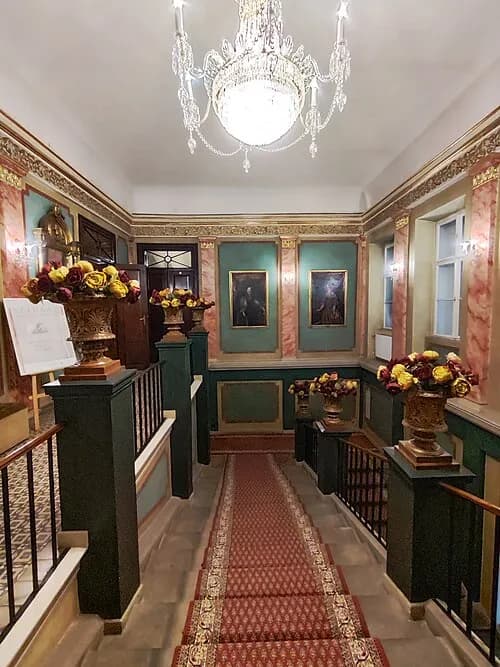
Permanent displays include archaeology, ethnography, military history, fine art and beautifully restored period rooms that recreate life during the Sułkowski family's residence.
For local families, the museum provides an engaging way to connect younger generations with the city's heritage. For visitors, it offers an excellent introduction before exploring nearby attractions, including the Market Square, Cathedral of St Nicholas and the picturesque streets of the Old Town.
Throughout the year, the museum also hosts temporary exhibitions, educational workshops and cultural events, ensuring the castle remains a vibrant part of modern city life rather than simply a monument to the past.
A peaceful corner inside the castle
Among the most fascinating spaces is St Anne's Chapel, closely associated with the Sułkowski family.
Serving as the family's burial chapel, it offers a quieter and more intimate perspective on the castle's history. Recent conservation work has carefully restored many of its historic features, allowing visitors to appreciate both its architectural beauty and its cultural significance.
Away from the grand reception rooms, the chapel reminds visitors that the castle was not only a seat of power but also a family home.
Preserving the past for future generations
Recent conservation projects demonstrate Bielsko-Biała's ongoing commitment to protecting its heritage.
Extensive restoration work has preserved the castle's exterior, while the addition of a contemporary glass roof above the inner courtyard has created a flexible space for concerts, exhibitions and community events.
These improvements have ensured the building continues to serve residents while welcoming visitors from across Poland and abroad.
It is a thoughtful balance between conservation and modern use, allowing one of the city's most important landmarks to remain both historically authentic and culturally relevant.
Why Zamek Sułkowskich matters today
Every city has a place that tells its story.
For Bielsko-Biała, that place is undoubtedly Zamek Sułkowskich.
It has stood through medieval conflicts, political change, industrial expansion and the creation of the modern city. It has survived fires, changing ownership and centuries of rebuilding while continuing to overlook the streets below.
Today, the castle remains far more than an impressive historic building. It is a symbol of Bielsko-Biała's resilience, identity and cultural heritage, connecting residents with their past while introducing visitors to the city's remarkable story.
Whether you spend an afternoon exploring the museum galleries, attend a cultural event in the courtyard or simply admire the castle as you wander through the Old Town, a visit to Zamek Sułkowskich offers one of the most rewarding experiences in Bielsko-Biała.
It is not simply the oldest building in the city, it remains its historic heart.