If you've ever wandered through the centre of Bielsko-Biała, you've probably noticed people stopping to smile at a small bronze dog or posing for photos with two adventurous young boys. These are not just public sculptures. They celebrate characters that have entertained generations of children and helped put Bielsko-Biała on the world map of animation.
The bronze statues of Reksio and Bolek and Lolek have become some of the city's best-loved landmarks, attracting families, animation enthusiasts and visitors keen to discover a different side of southern Poland. Together, they tell the story of a city that has long been recognised as the home of Polish animated film.
A City Built On Imagination
For decades, Bielsko-Biała has been synonymous with animation thanks to Studio Filmów Rysunkowych (Animated Films Studio). Established in the aftermath of the Second World War, the studio went on to produce more than a thousand animated films and television episodes, earning international recognition and introducing unforgettable characters to audiences across Europe and beyond.
Among its greatest successes were the mischievous brothers Bolek and Lolek and the friendly spotted dog Reksio. Long before streaming services and digital entertainment, these characters became household names through simple storytelling, memorable adventures and timeless humour.
Today, their legacy lives on not only through television archives but also in the streets of the city where they were created.
Reksio Welcomes Visitors to the City Centre
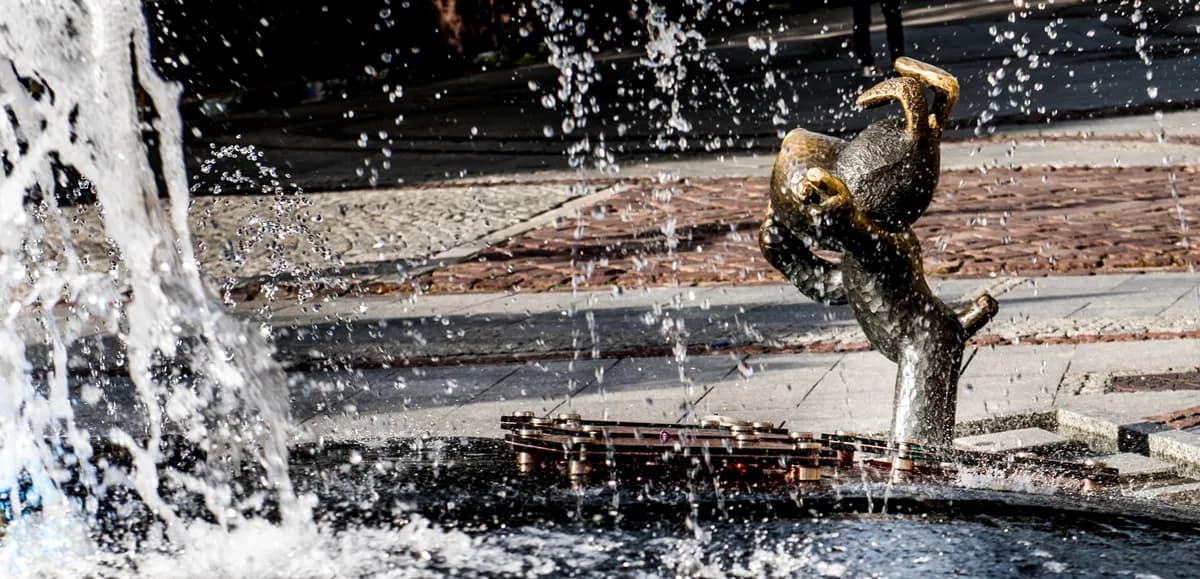
Unveiled on 3 August 2009, the bronze statue of Reksio was the first cartoon character to receive a permanent monument in Bielsko-Biała.
Created by sculptor Jerzy Mikler, the charming sculpture stands near the Biała River between ul. 11 Listopada and ul. Stojałowskiego. Measuring just under a metre tall, Reksio sits patiently waiting to greet passers-by with the same cheerful personality that made him famous on television.
Reksio first appeared in 1967, created by director and animator Lechosław Marszałek. Across 65 episodes produced over more than two decades, the curious little dog found himself solving problems, making friends and exploring the world with warmth and optimism. His adventures relied on expressive animation rather than dialogue, making the series easy to understand regardless of language.
That universal appeal continues today. Visitors from across Poland and abroad often seek out the statue as one of the city's essential photo stops.
Look closely and you'll notice that Reksio's nose shines much brighter than the rest of the sculpture. Like many famous monuments across Europe, local tradition suggests rubbing his nose for good luck. Thousands of visitors have done exactly that over the years, leaving the bronze polished to a bright finish through countless friendly encounters.
During the Christmas season, Reksio even receives a festive makeover, with illuminated decorations nearby adding another touch of magic to the city centre.
The Adventures of Bolek and Lolek Continue
Just two years later, on 19 May 2011, another pair of animated legends found a permanent home in Bielsko-Biała.
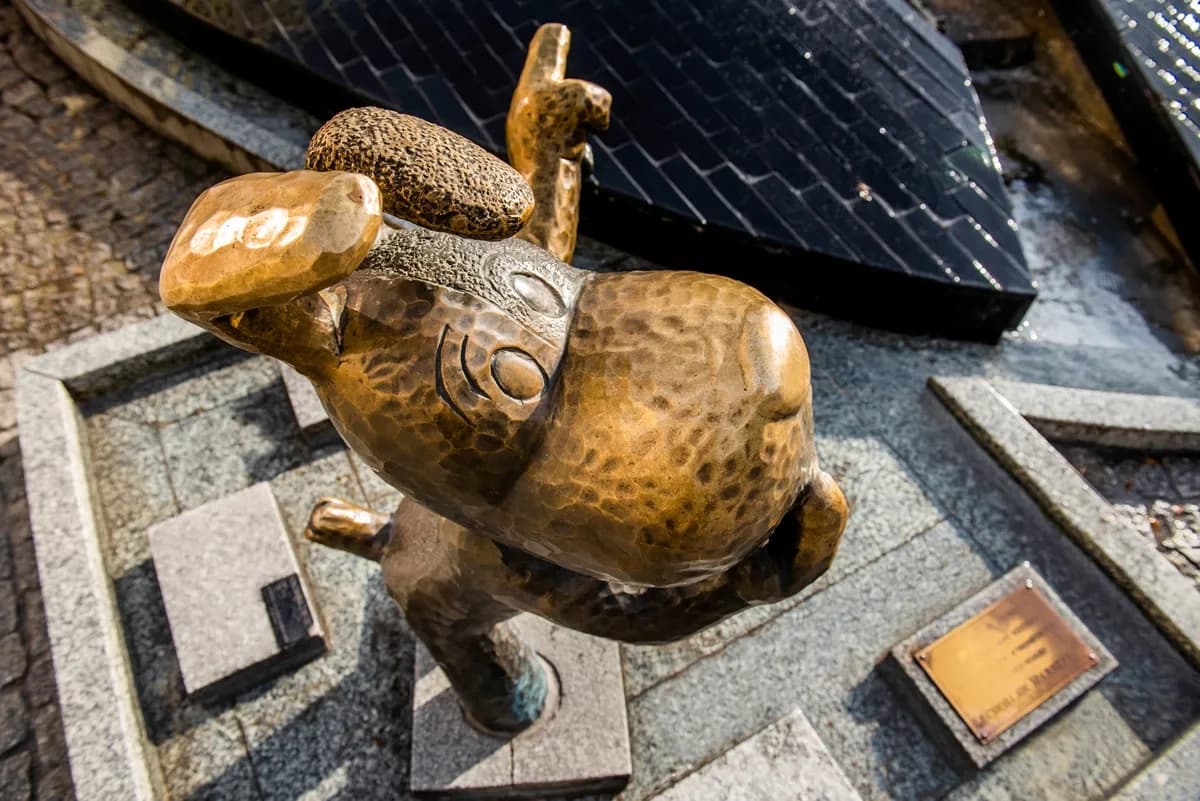
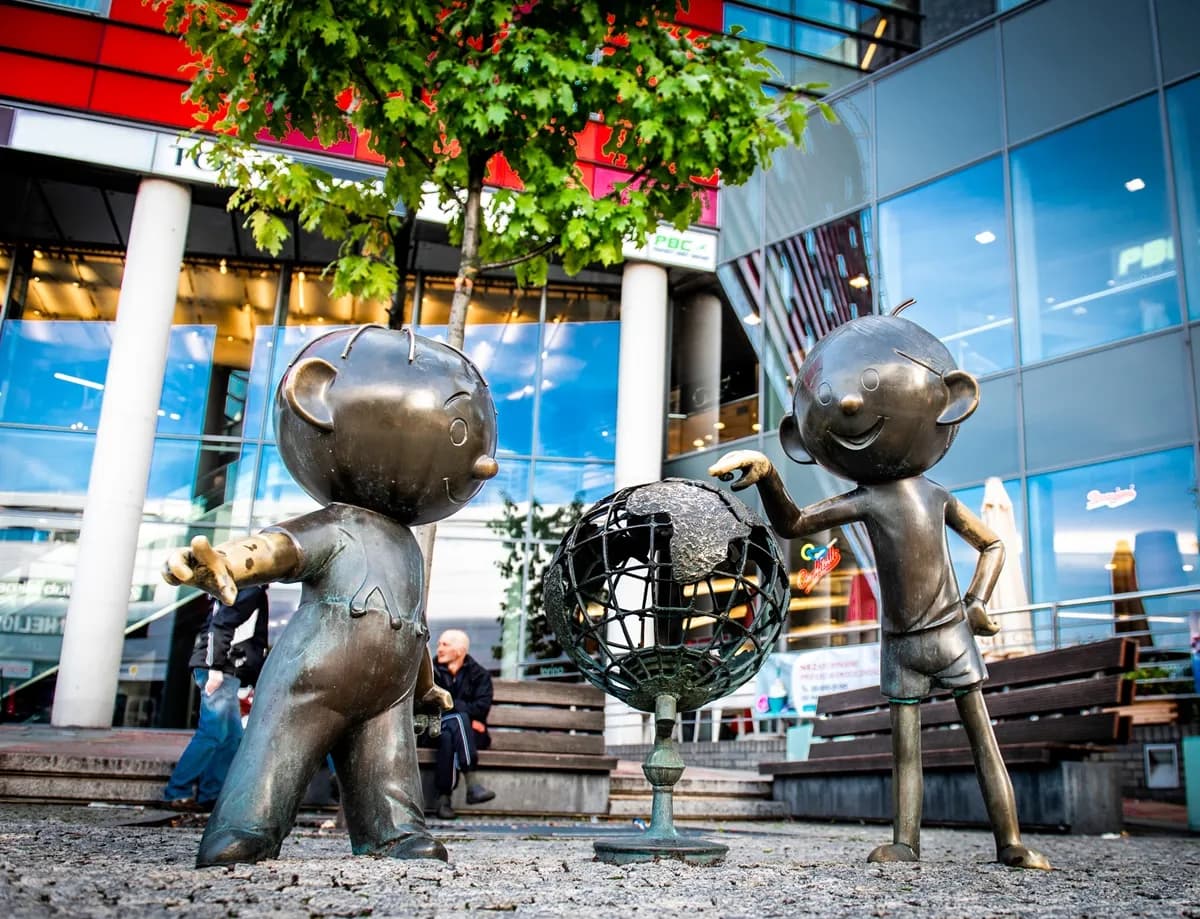
The bronze sculpture of Bolek and Lolek, designed by Jarosław Mączka, stands on Mostowa Street outside Galeria Sfera, where shoppers and visitors regularly stop to admire the famous brothers.
Rather than simply depicting the pair standing together, the sculpture incorporates a bronze globe beneath them. One of the brothers points directly towards Bielsko-Biała, a thoughtful detail that celebrates the city as the birthplace of these internationally recognised characters.
Bolek and Lolek first appeared in 1962 and quickly became one of Poland's greatest cultural exports. Unlike many animated series of the time, the adventures featured very little dialogue. Instead, visual storytelling carried each episode, allowing audiences from dozens of countries to enjoy the brothers' escapades without language barriers.
Over the years, around 150 episodes and two feature films were produced, making Bolek and Lolek among the most successful characters ever created by Studio Filmów Rysunkowych.
For many Polish families, they remain a nostalgic reminder of childhood. For younger visitors, the statues often provide a first introduction to two characters whose adventures continue to charm new generations.
Following the Fairy Tale Trail
The Reksio and Bolek and Lolek sculptures are part of Bajkowe Bielsko-Biała, also known as the Fairy Tale Trail.
This walking route celebrates the city's remarkable contribution to animation by guiding visitors to sculptures of characters created at Studio Filmów Rysunkowych. It's an enjoyable way to explore the centre while learning about the artists, animators and storytellers who helped shape Polish popular culture.
Families often turn the trail into a treasure hunt, while photography enthusiasts appreciate the playful settings chosen for each sculpture. The route also encourages visitors to discover nearby cafés, museums and public spaces that they might otherwise overlook.
Rather than being hidden away in a museum, these characters remain part of everyday life. Children wave at them on their way to school, tourists pause for photographs and residents continue to treat them as familiar neighbours.
A Lasting Symbol of Bielsko-Biała
Many cities are known for castles, churches or grand monuments. Bielsko-Biała certainly has those too, but its cartoon characters offer something distinctive.
The statues celebrate creativity, storytelling and an artistic tradition that has brought joy to millions of people for more than sixty years. They remind visitors that some of Poland's most beloved animated characters were born not in Hollywood or Tokyo, but in a studio nestled in the foothills of the Beskids.
Whether you're discovering the city for the first time or returning to relive childhood memories, a visit to Reksio, Bolek and Lolek offers a warm reminder that the simplest stories often leave the biggest impression. Their bronze figures have become woven into the fabric of modern Bielsko-Biała, reflecting a proud cultural heritage that continues to delight residents and visitors alike.
image credit: Urząd Miejski w Bielsku-Białej