One exhibition asks why we hesitate; another tests how we see, giving Bielsko-Biała two very different encounters with contemporary art this summer.
For a city spending 2026 in the role of Poland's first Polish Capital of Culture, contemporary art is not simply part of the programme. It is one of the ways Bielsko-Biała is examining how people understand the world around them.
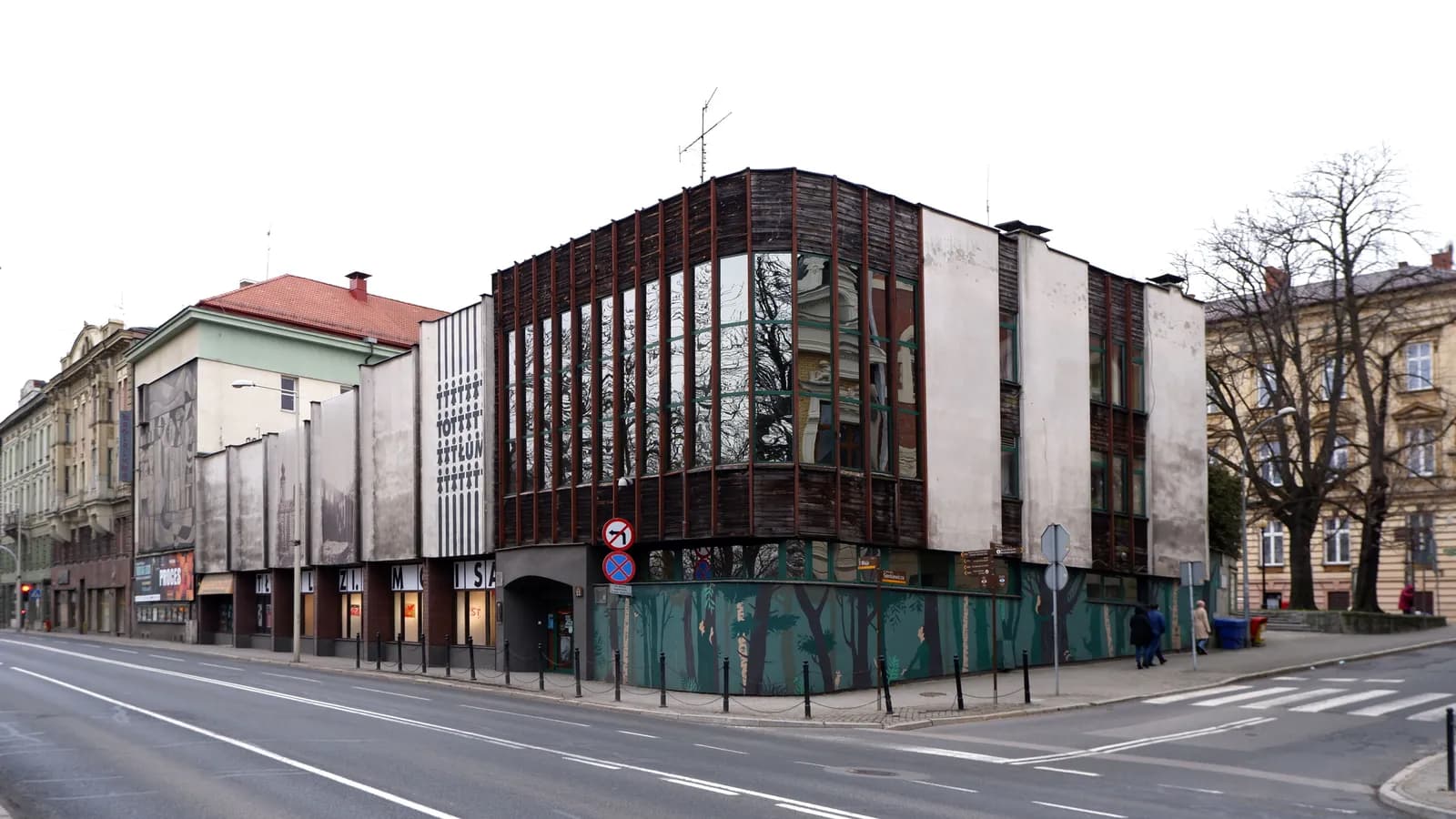
At Galeria Bielska BWA, two exhibitions currently offer particularly different ways into that conversation. Weronika Zalewska's Archive of Hesitation (Archiwum wahań) occupies the upper gallery, while Tomasz Jędrzejko's Border Moments (Momenty graniczne) fills the lower gallery. One looks at social transformation through the familiar format of the television game show. The other uses repetition, geometry and screenprinting to challenge the way the eye processes visual information.
The pairing is interesting precisely because the works do not attempt to say the same thing. Instead, they demonstrate the range of contemporary practice being presented by an institution that has played an important role in Bielsko-Biała's visual arts scene for decades.
When uncertainty becomes part of the artwork
Archive of Hesitation has an international story before visitors even enter the gallery. The project represented Poland at the Malta Biennale 2026, where it was presented in the Polish Pavilion in Valletta. The Bielsko-Biała presentation is its Polish premiere, organised by the Adam Mickiewicz Institute and Galeria Bielska BWA.
Artist Weronika Zalewska and curator Ada Piekarska use the format of a television quiz show as the starting point for a much wider examination of Europe's experience of transformation. The familiar structure of questions, answers and instant judgments becomes a way of thinking about how societies were encouraged to understand modernity, progress and the desire to “catch up with the West” during the years of transformation.
That choice of format is significant. A television game show usually promises certainty: there is a question, there is an answer, and someone is expected to know it. Zalewska's work turns that expectation around.
The exhibition considers hesitation not simply as uncertainty or indecision, but as something that can interrupt systems demanding immediate answers. The result is a video installation that asks visitors to look more closely at the assumptions behind apparently straightforward choices.
For Bielsko-Biała, the exhibition also represents a direct connection between the city's cultural institutions and an international contemporary art event. Ada Piekarska, who leads the gallery's programming team, served as curator of the Polish Pavilion project alongside Zalewska.
The exhibition remains open until 25 October, giving audiences time to encounter the work after its international presentation and consider it from a Polish perspective.
Repetition, perception and the limits of vision
Downstairs, Border Moments takes visitors in a markedly different direction.
Tomasz Jędrzejko's exhibition is built from screenprints created through the multiplication of repeating modules. Those elements combine into large-scale compositions whose regularity can appear hypnotic, while small shifts and interruptions challenge the stability of the patterns. The exhibition forms part of Galeria Bielska BWA's programme devoted to serigraphy, one of the younger graphic techniques to emerge during the 20th century.
The works reward sustained looking. Their geometric structures may initially appear precise and controlled, but the longer they are observed, the more the relationship between order and disruption becomes apparent.
That idea of discipline has an interesting parallel in Jędrzejko's life outside the studio. The Bielsko-Biała-born artist is also passionate about endurance sports, including triathlon and ultramarathons, and will discuss that relationship between physical and artistic endurance during an artist's tour on 3 September.
The tour begins at 18:00 and will give visitors the opportunity to hear Jędrzejko discuss the exhibition, his screenprinting technique and the role that sport plays alongside his artistic practice. Admission to the tour is free.
The timing makes the event particularly relevant for visitors planning to see the exhibition before it closes on 6 September. It also provides something that a gallery label cannot: the opportunity to hear directly from the artist about how the works were made and how their ideas developed.
Together, the two exhibitions demonstrate the breadth of what contemporary art can ask of its audience. Zalewska encourages visitors to reconsider certainty, memory and the narratives surrounding social transformation. Jędrzejko asks them to slow down and examine what happens when visual order is repeated, shifted and disrupted.
Their approaches may be different, but both reward attention rather than a quick glance. That makes them fitting exhibitions for a year in which Bielsko-Biała is placing culture at the centre of its public life.
As Poland's first Polish Capital of Culture, the city is hosting more than one hundred cultural events throughout 2026 under the theme “Tkamy dobrostan”, or “Weaving Wellbeing”. Within that broader programme, Galeria Bielska BWA offers something particularly valuable: space to pause, look carefully and allow an artwork to complicate an otherwise familiar idea.
For visitors, the two exhibitions provide two very different reasons to do exactly that.
Visitor Information
Venue: Galeria Bielska BWA
Address: ul. 3 Maja 11, Bielsko-Biała
Opening hours: Tuesday to Sunday, 10:00–18:00